

RV & Van Life
Freedom to stay as long as the view is good

Built for the way you travel
Full-time vanlifers
Run a fridge, lights, fans and a laptop every day without relying on campsite hookups.
Weekend RVers
Skip the generator and enjoy quiet evenings at the campsite or the trailhead.
Remote workers on the move
Stay online and productive from the parking spot with the best Wi-Fi and the best view.
Families and pet travellers
Keep fans, lights and device charging running for everyone, including the dog.
Add up what your van uses in a day
| Device | Typical power draw | What to know |
|---|---|---|
| 12V compressor fridge | 40–60 W while running | It cycles on and off, so average use is lower than the rating. |
| LED lights | 5–20 W | Very efficient, so lighting is rarely the problem. |
| Roof vent fan | 10–40 W | Draw varies by speed. Handy for hot nights. |
| Laptop and monitor | 60–150 W | A major user if you work from the van. |
| Wi-Fi router or hotspot | 5–20 W | Small but runs for many hours. |
| Water pump | 30–60 W | Only runs when the tap is on. |
| Coffee maker, microwave or induction hob | 600–1,500 W or more | Heating uses a lot. Check your power station's output rating first. |
| Example day | ≈ 1,160 Wh |
Example day: laptop 60 W × 6 h = 360 Wh · fridge averaging 30 W × 24 h = 720 Wh · lights 10 W × 5 h = 50 Wh · phones 15 W × 2 h = 30 Wh. Total ≈ 1,160 Wh. Add a 20–30% margin for cloudy days and conversion losses.
Pick the battery from the budget
Pick the output for the biggest load
Three ways to keep the battery full
Solar panels
Wall power
Check your model's options
Make the most of your solar
- Park in sun where you can, and use a portable panel to follow the sun when the van is in shade.
- Keep roof panels clean, because dust and bird droppings reduce output.
- Run heavy appliances in the middle of the day, when panels are producing most.
- Track your daily use for a week, then adjust the plan to your real numbers.
- Keep the power station ventilated and out of direct heat inside the vehicle.
Pick a setup that matches your rig
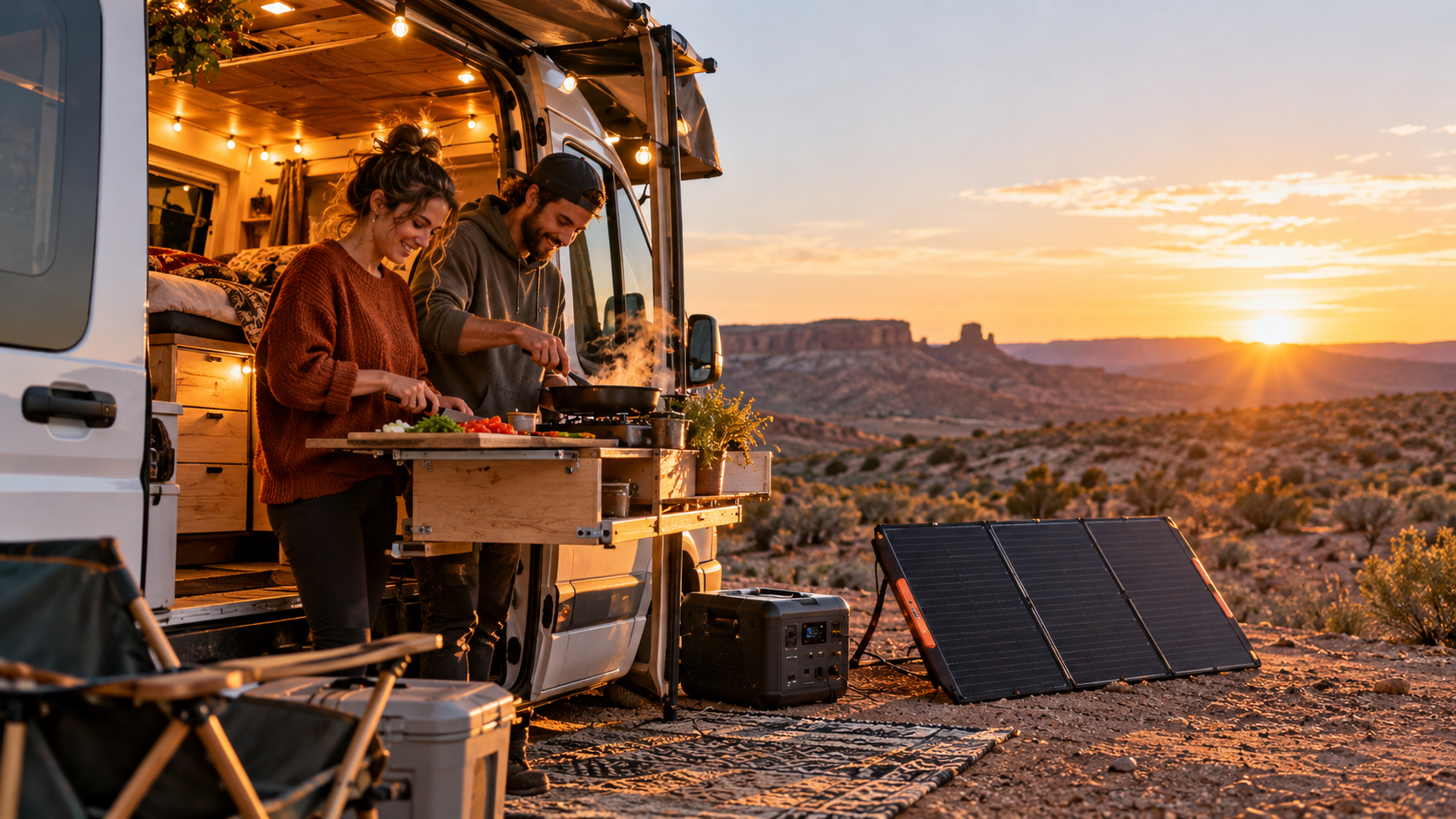
Weekend Van Kit
- Easy to place and move
- Flexible panel for tight roof space
- Suits light daily budgets

Road Home Setup
- High-output solar for faster recharging
- More capacity for daily use
- Good fit for a full-time van
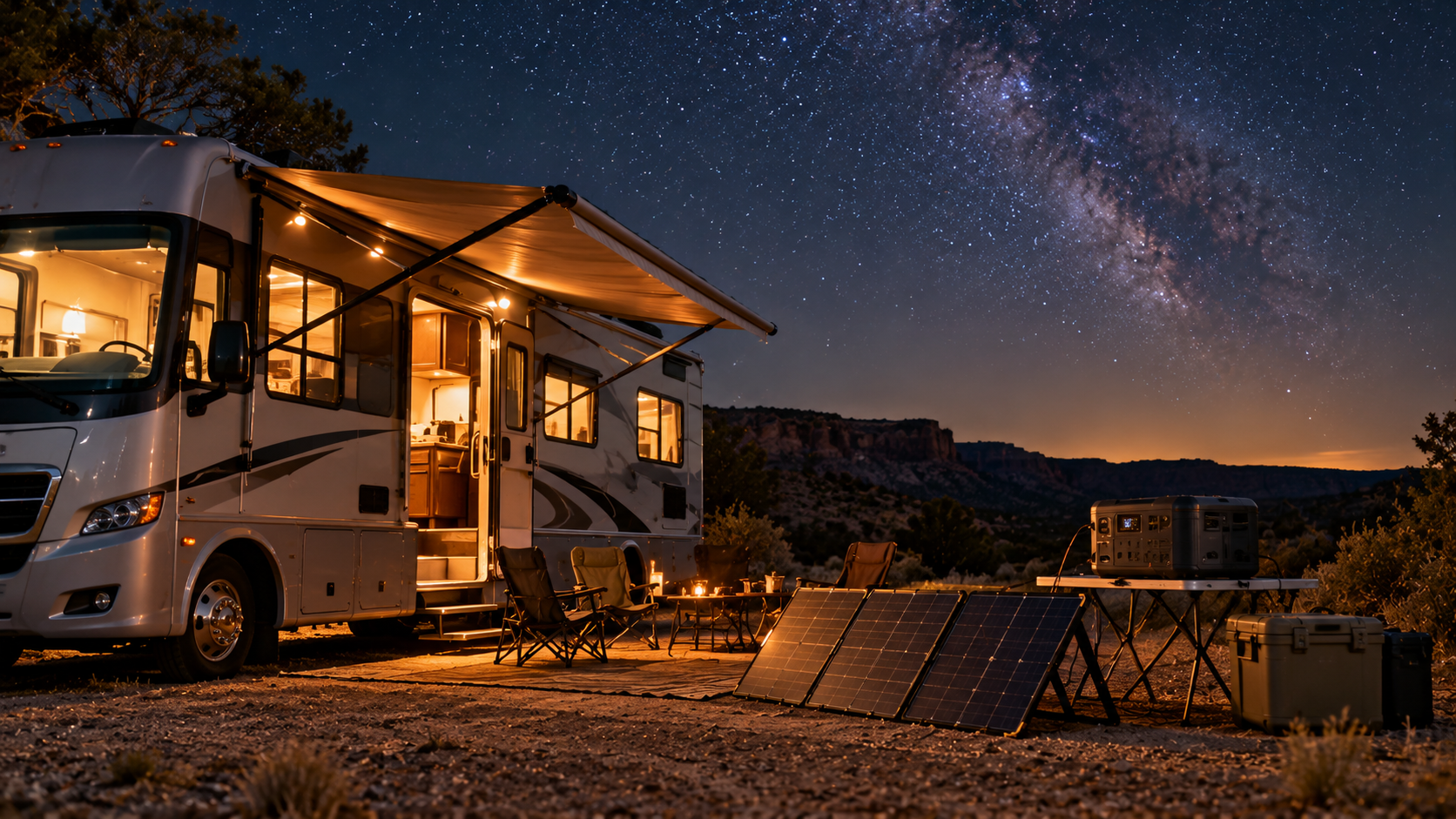
Big Rig Power
- High output for heavier appliances
- Large battery for multi-day stays
- Compatible with extra panels
Roof-mounted, flexible or portable?
Flexible panels
Thin and light, and they suit curved roofs and tight spaces. Secure them properly and follow the installation guidance.
Foldable portable panels
Park in the shade and set the panel out in the sun. Great when you can't tilt the van toward the sun.
High-output panels
A 400W–600W panel setup charges quickly. It's a strong choice for full-time travel where the battery is large.
What matters most for van and RV use
Capacity (Wh)
Compare it with your daily energy budget from Step 1.
Output (W)
Make sure it covers your biggest appliance, with headroom.
Solar input
A higher input accepts bigger panels and charges faster.
Charging options
Check which ways it charges: wall, solar and, where supported, vehicle.
Weight and size
Check it fits where you plan to keep it and that you can move it safely.
Room to grow
Check which panels it accepts so you can add more later.
Set up once, enjoy for miles
Plan
- Write down your daily energy budget.
- Choose the battery size from that number.
- Measure the roof space for panels.
- Leave room to expand later.
Install and secure
- Keep it ventilated and out of direct heat.
- Secure it so it can't slide or tip while driving.
- Keep it away from water and fuel.
- Use a qualified installer for any permanent wiring.
On the road
- Park in the sun when you can.
- Use heavy appliances at midday.
- Top up from the wall when it's available.
- Check your battery level before you set off.
Questions from van and RV travellers
Make a list of every device, multiply its watts by the hours you use it each day, and add the results to get your daily watt-hours. Add a 20–30% margin, then choose a power station whose capacity is higher than that total. Check the output rating too, so it can run your biggest appliance.
Yes, many people do. A 12V compressor fridge typically draws about 40–60 W while running and cycles on and off, so its average use is lower. Add it to your daily energy budget and check that the output rating covers it.
Some models support charging from a vehicle outlet. Check the product page for your model’s charging options. Wall power and solar panels work with every power station.
It depends on your daily energy use and how much sun you get. As a rough guide, divide your daily watt-hours by the peak sun hours for your area and by 0.75 to allow for losses, to get an idea of the panel watts you need. Roof space is often the limit, and a portable panel can add more.
Air conditioners and electric heaters draw a lot of power. Check the appliance’s wattage against the power station’s output rating, and its running time against the battery capacity. Many setups aren’t designed for continuous heavy heating, so check the product page before you rely on it.
Keep it ventilated, secured so it can’t move while driving, away from water and fuel, and out of extreme heat. Don’t leave it in a hot closed vehicle. Follow the manufacturer’s manual for your model.
Size the battery with spare capacity, cut back on heavy appliances, and top up from a wall socket when you can. A larger panel setup also helps on dull days, because it still collects some energy.
More ways to stay powered
Outdoor & Camping Power
Stay powered while camping, traveling and exploring.
Work & Productivity Power
Keep your laptop and gear running from anywhere.
Energy Independence
Build a more flexible approach to your energy needs.