

Emergency Power
Preparation is the difference between worry and calm
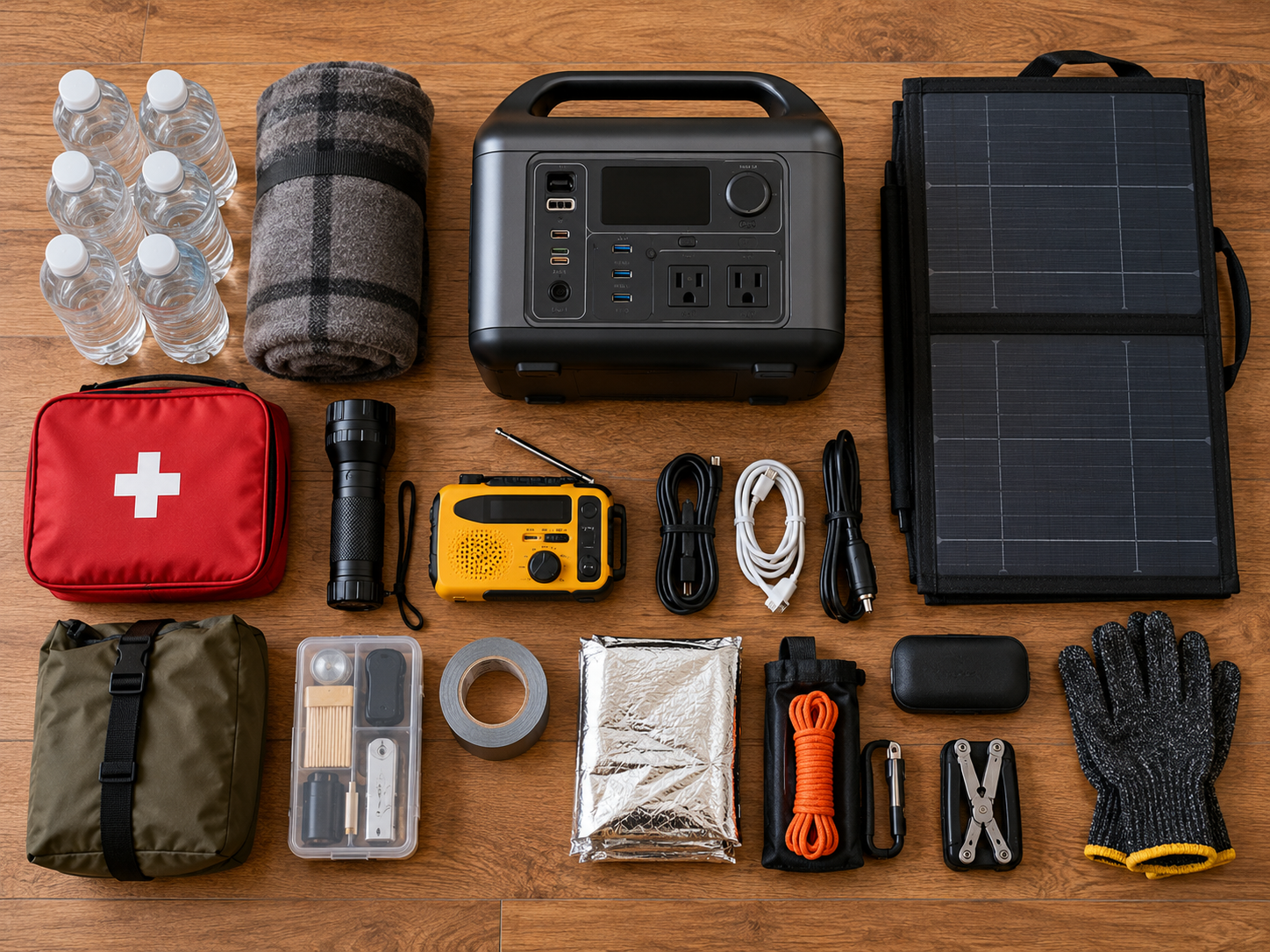
Ready for what comes next
Storm-prone areas
Keep lights and phones running through severe weather and the outage that follows.
Preparedness planners
Add a charged power station to your emergency kit alongside water, food and first aid.
Families and caregivers
Keep everyone connected and the house lit when the grid fails.
Small business owners
Keep a phone, a card reader and a light running to stay open when the power goes.
How much power do you need for three days?
| Device | Typical power draw | What to know |
|---|---|---|
| Phones and tablets | 5–20 W | Top priority. Communication and information. |
| Radio or weather radio | 2–10 W | Very small draw. Keeps you informed. |
| LED lantern or lights | 5–15 W | Efficient. Lighting is easy to cover. |
| Wi-Fi router | 10–30 W | Useful when mobile networks are congested. |
| Laptop | 45–100 W | For work, maps and information. |
| Refrigerator | 100–250 W while running | Large draw. Plan separately and keep the door closed. |
| Heating or cooling appliances | 1,000 W or more | Beyond what most portable units can sustain. |
| Example 72-hour plan | ≈ 1,560 Wh |
Example: phones and radio 20 W × 6 h = 120 Wh · lights 20 W × 5 h = 100 Wh · router and laptop 75 W × 4 h = 300 Wh. That's 520 Wh a day, or ≈ 1,560 Wh over 72 hours. Add a 20–30% margin, or solar to extend it.
Prioritise
Add solar for the long haul
Keep it ready, not just owned
Charge it
Store it well
Test it
Your emergency power checklist
- Power station fully charged and stored where you can grab it.
- Charging cables for every phone and device you rely on.
- A flashlight or lantern and spare batteries as backup.
- A solar panel stored with it, and a clear spot outdoors to use it.
- A written list of what to plug in first.
Pick an emergency kit that fits your household
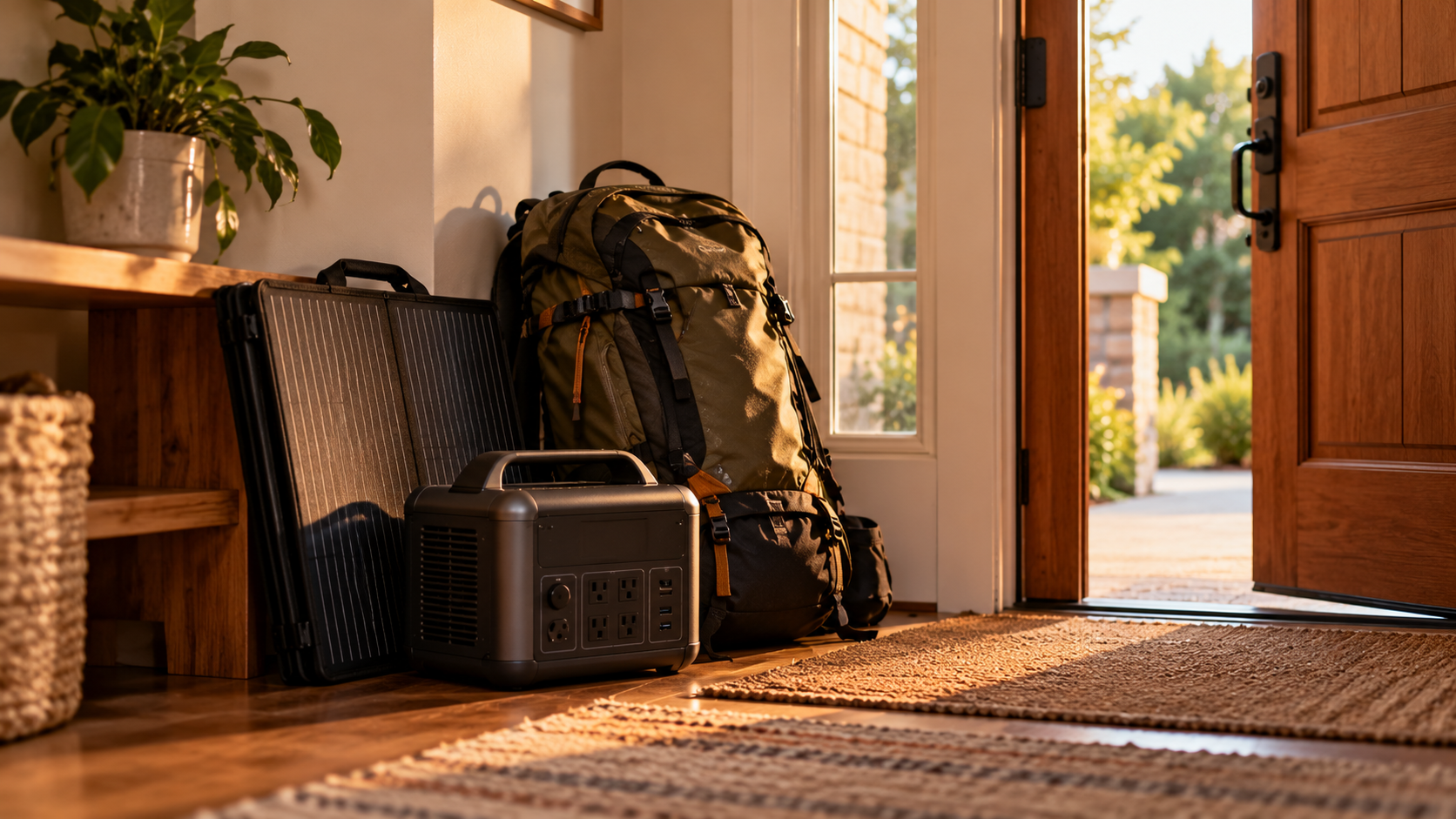
Grab-and-Go Kit
- Compact and easy to grab
- Includes a solar panel
- Covers communication and light
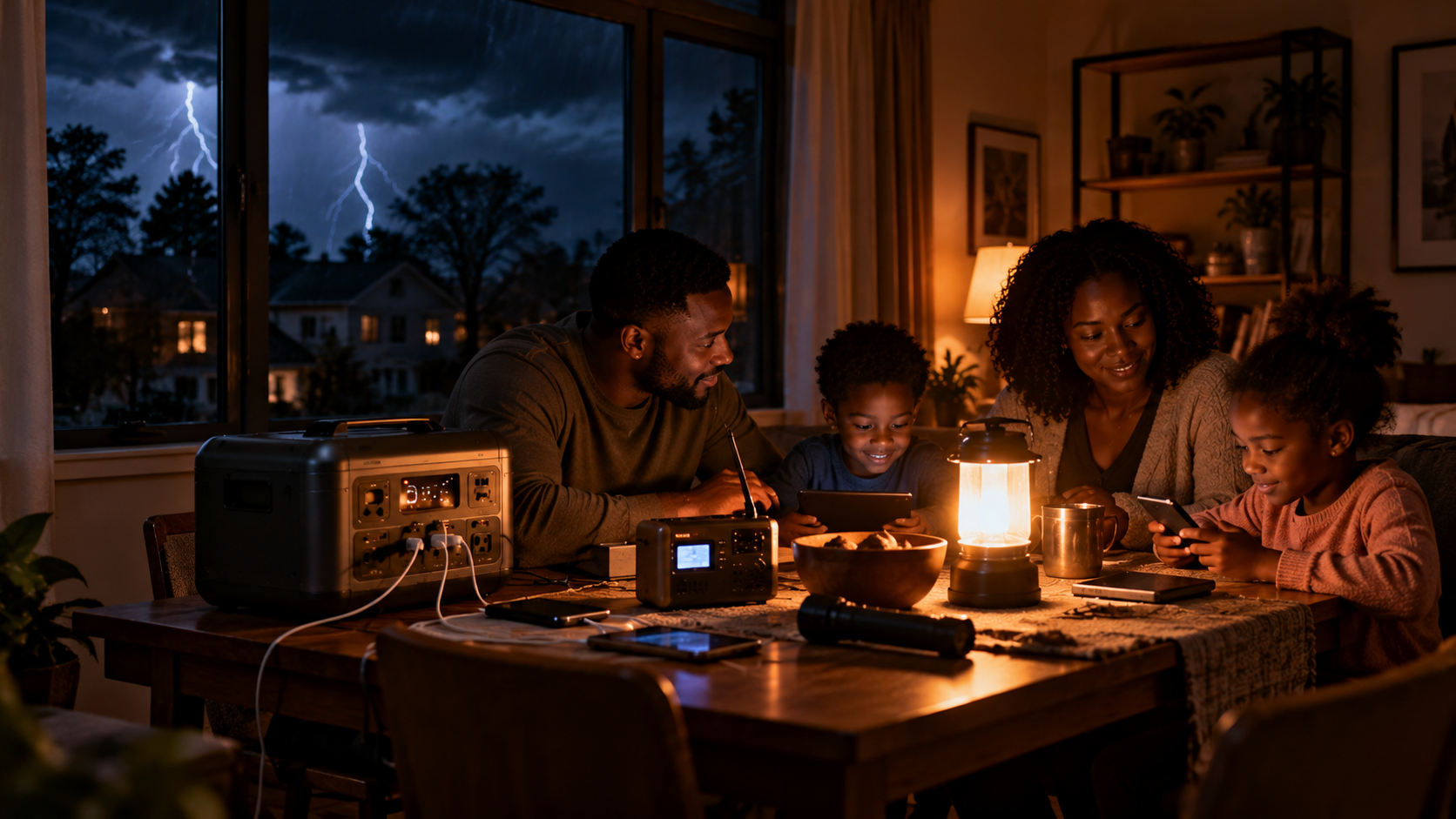
Family Ready Kit
- Room for more devices
- Flexible panel is easy to store
- Good for a 72-hour plan
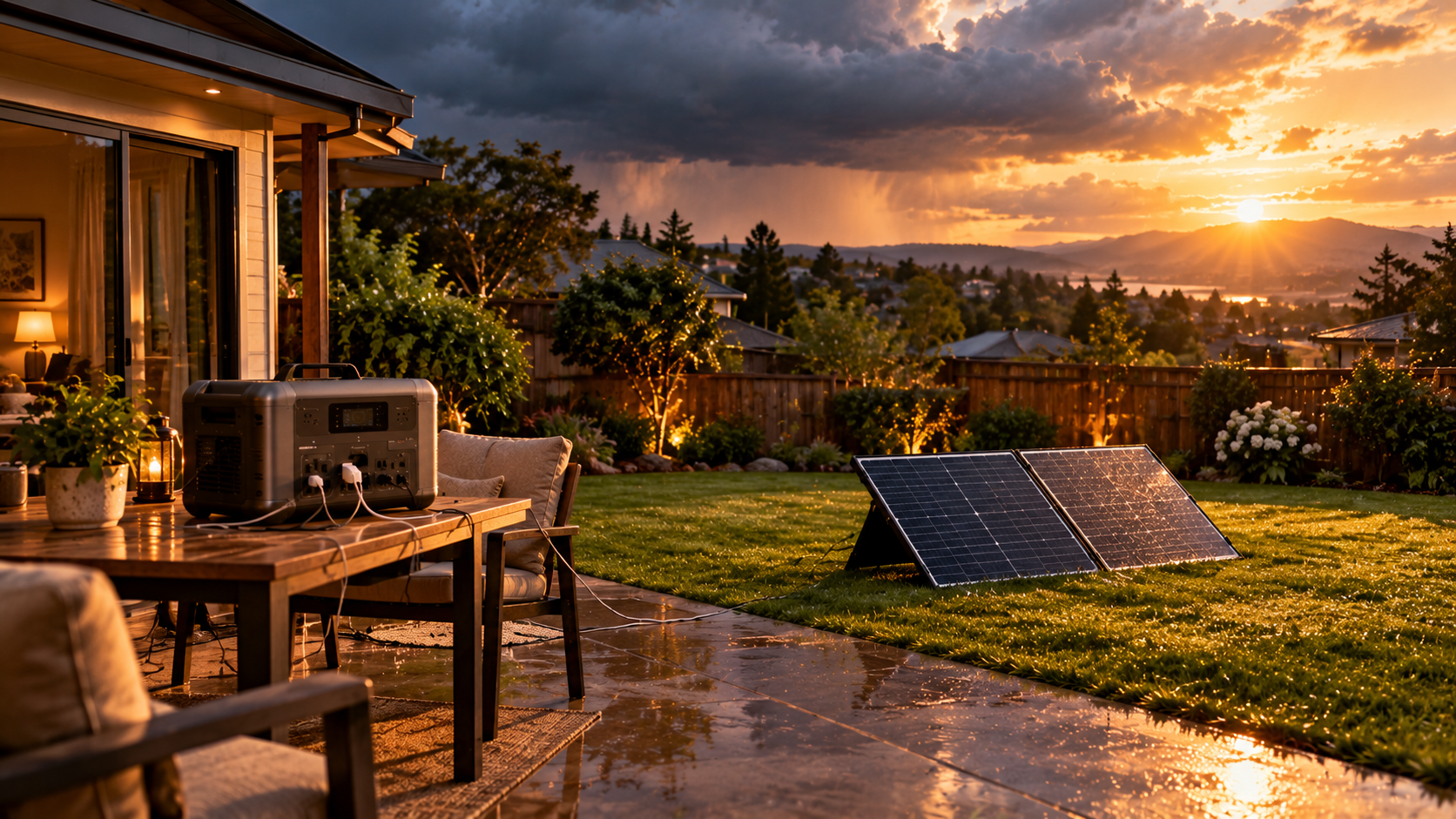
Extended Outage Kit
- Large capacity for longer outages
- Handles bigger loads
- Solar to extend runtime
Panels that are easy to store and ready to use
Foldable panels
Fold flat and store with the power station. Easy to set out in a yard, balcony or window with good sun.
Flexible panels
Lightweight and quick to carry, which suits a grab-and-go kit. Keep them dry and flat when stored.
High-output panels
A 400W panel recharges much faster, which matters when you want to refill the battery in a day.
What to look for in emergency power
Capacity (Wh)
Compare it with your 72-hour total from Step 1.
Output (W)
Cover everything you plan to run at the same time.
Solar input
Check it accepts a panel big enough to recharge quickly.
Portability
Weight and handles matter when you need to move it fast.
Built-in light and ports
Useful extras: a light, USB-C and DC ports.
Warranty and support
Know how long you're covered and how to get help.
Prepare, use, recover
Prepare
- Charge it fully and store it ready.
- Pack cables, a flashlight and a radio.
- Write down your priorities.
- Check it every few months.
During
- Plug in the essentials first.
- Turn off what you don't need.
- Use solar in daylight if you have it.
- Keep it dry, ventilated and away from heat.
Recover
- Recharge it fully when power returns.
- Note how long things ran.
- Restock cables and spares.
- Update your plan with what you learned.
Questions about emergency power
Add up the watt-hours for the devices you want to run, such as phones, a radio, lights and a router, multiply by the number of days, and add a 20–30% margin. The sizing table above includes an example 72-hour plan. A fridge or any heating appliance changes the answer a lot, so plan those separately.
Batteries slowly lose charge over time, so follow your model’s manual. A good habit is to check the charge every few months and top it up so it’s ready when you need it.
Yes, with a solar panel. Set the panel outdoors in direct sun, connect it to the power station and it will refill the battery during the day. Charging speed depends on the panel wattage and the weather.
Some can, if the output rating covers the fridge’s running and surge watts and the capacity covers the hours you need. Keep the fridge door closed to keep food cold longer.
Communication and information first: phones and a radio. Then light and a router. Then anything else on your list. Writing down a priority order in advance makes it easy.
Keep the power station indoors, dry and ventilated. Set solar panels out only in good weather, and take them in if there’s high wind or lightning. Follow the manufacturer’s manual.
Check the equipment’s power needs and the manufacturer’s guidance, and talk to the provider about a backup plan. A power station shouldn’t be the only plan for essential medical equipment.
More ways to stay powered
Home Backup Power
Keep essential devices powered when the grid goes down.
Energy Independence
Build a more flexible approach to your energy needs.
Outdoor & Camping Power
Stay powered while camping, traveling and exploring.