

Outdoor & Camping Power
Power that follows you off the grid
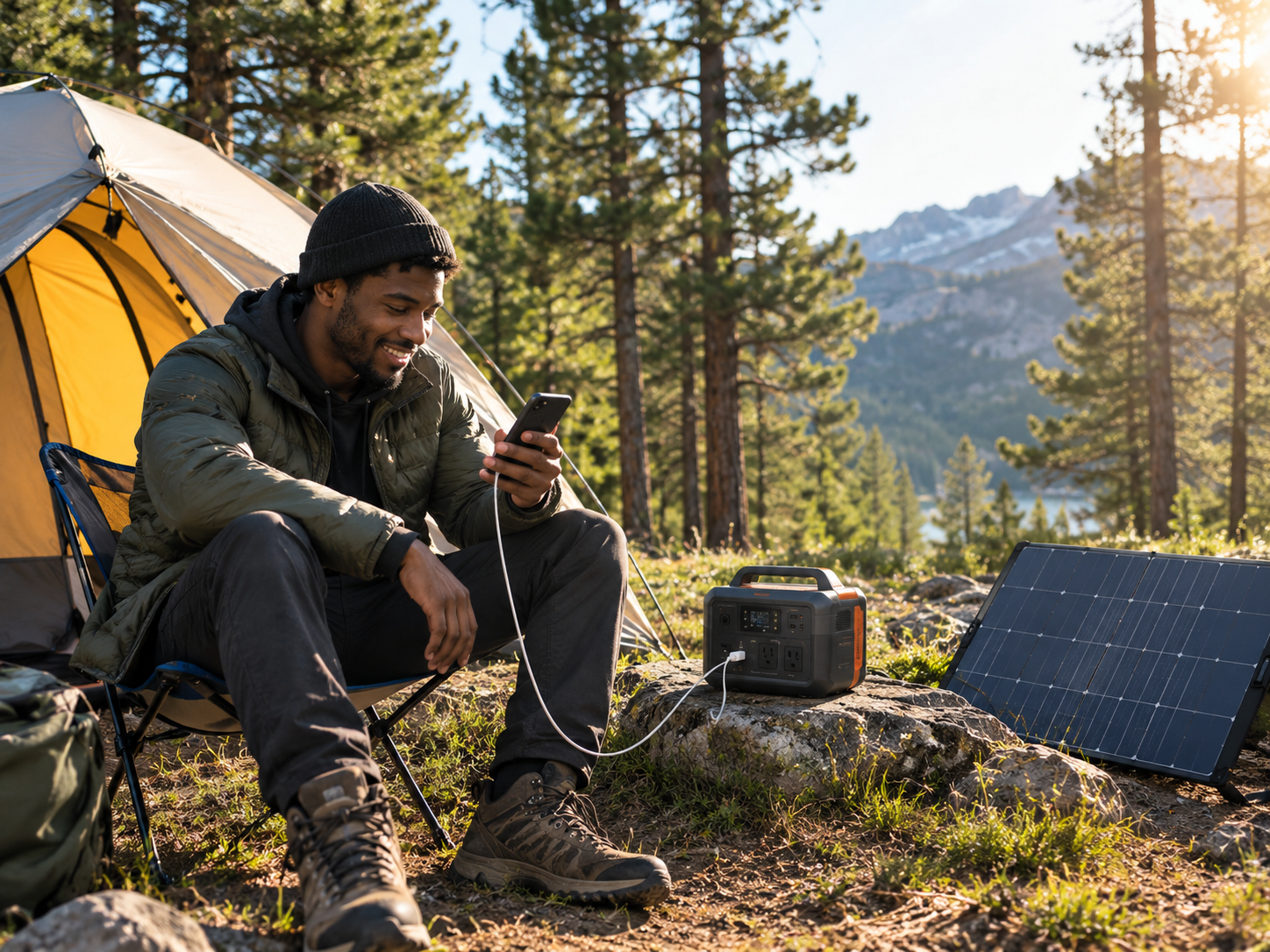
Made for people who like to explore
Weekend campers
Keep phones, lights and a speaker running for a night or two without worrying about the battery bar.
Road-trippers and overlanders
Charge cameras, drones and navigation gear along the way, then top up from the sun at each stop.
Families and groups
Share one power source for lights, fans and device charging so everyone stays connected and comfortable.
Photographers and creators
Keep camera batteries, laptops and drones topped up when you're hours from the nearest socket.
Work out what you need to power
| Device | Typical power draw | What to know |
|---|---|---|
| Smartphone charging | 5–20 W | A full charge uses only a small slice of a power station's battery. |
| LED camp lights / string lights | 5–15 W | Very efficient. Easily runs all evening. |
| Portable fan | 10–30 W | Useful for warm nights. Power draw varies by speed. |
| Laptop | 45–100 W | Check the charger rating printed on the adapter. |
| Camera or drone battery charger | 20–60 W | Charge batteries in the afternoon while the panel is working. |
| 12V compressor cooler / mini fridge | 40–60 W while running | It cycles on and off, so average use is lower than the rating. |
| Electric kettle, hot plate or heater | 1,000 W or more | Heating products draw a lot. Check the output rating before you plug one in. |
Example: a 1,000 Wh battery powering a 50 W load runs for roughly 1,000 × 0.85 ÷ 50 = 17 hours. The 0.85 allows for energy lost when converting battery power to AC or USB output.
Check the output (W)
Check the capacity (Wh)
How solar charging works at camp
Place the panel
Connect to the power station
Charge and use
Get more from every sunny hour
- Face the panel toward the sun and adjust it every hour or two.
- Keep the panel clean. Dust and dew reduce output.
- Charge during the day and save heavy use for the evening.
- Top up from a wall socket or car before you leave so you start full.
- On cloudy days charging is slower, so size your battery with spare capacity.
Pick a setup that matches your trip
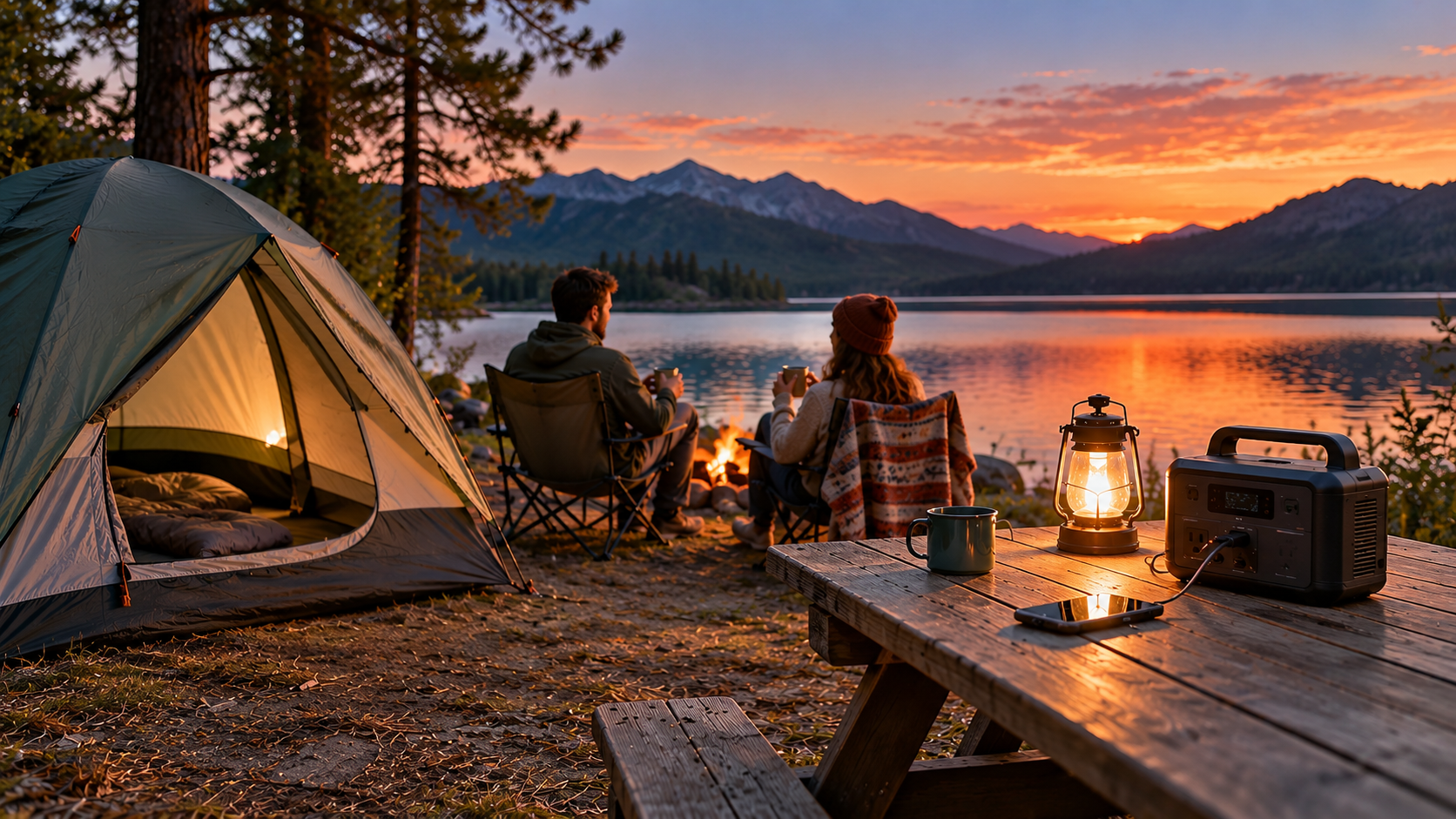
Weekend Camper
- Light enough to pack easily
- Flexible panel is easy to carry
- Great for lights, phones and cameras
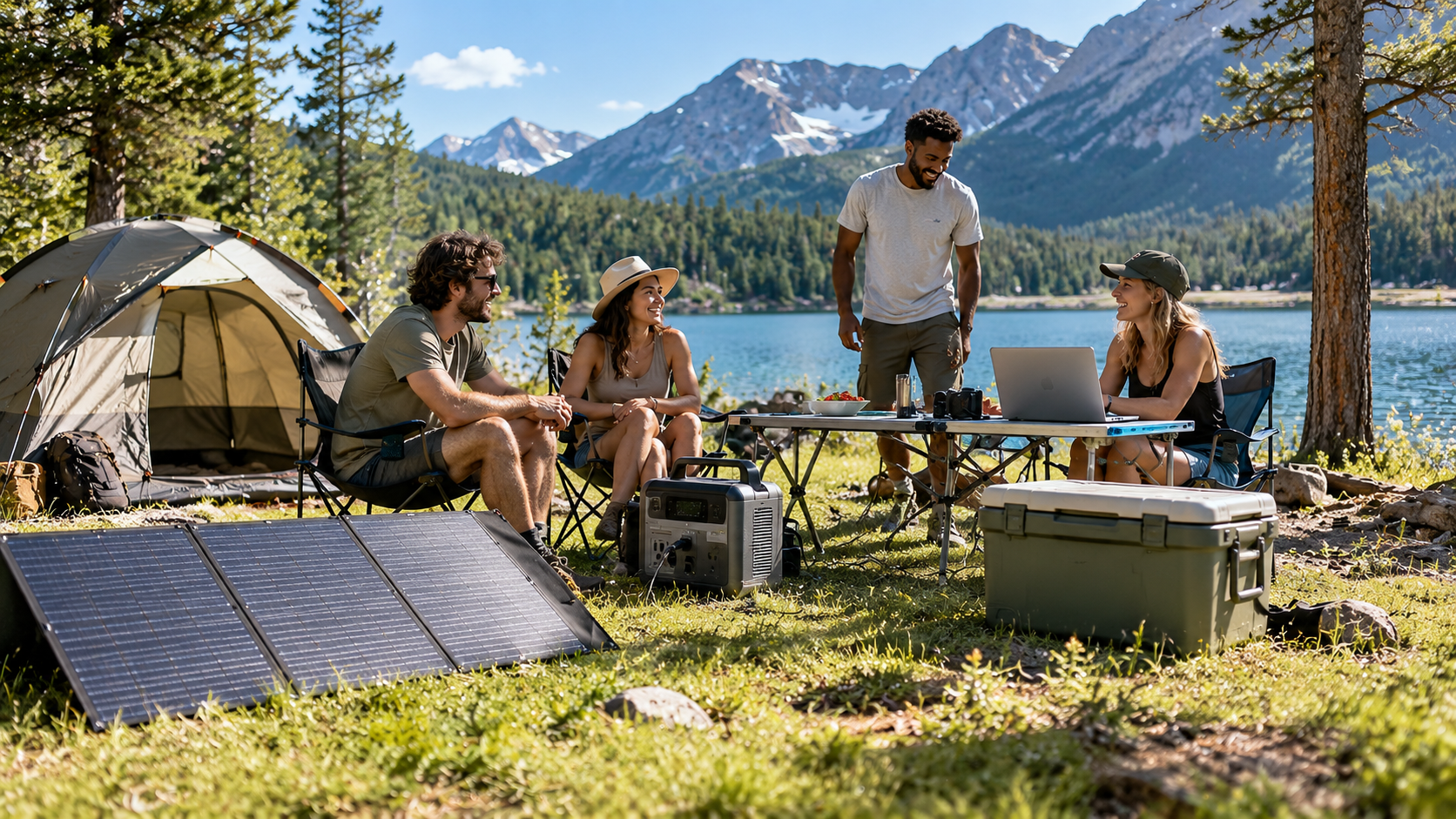
Extended Explorer
- Room for more devices at once
- Suits small groups and longer stays
- Flexible solar panel included
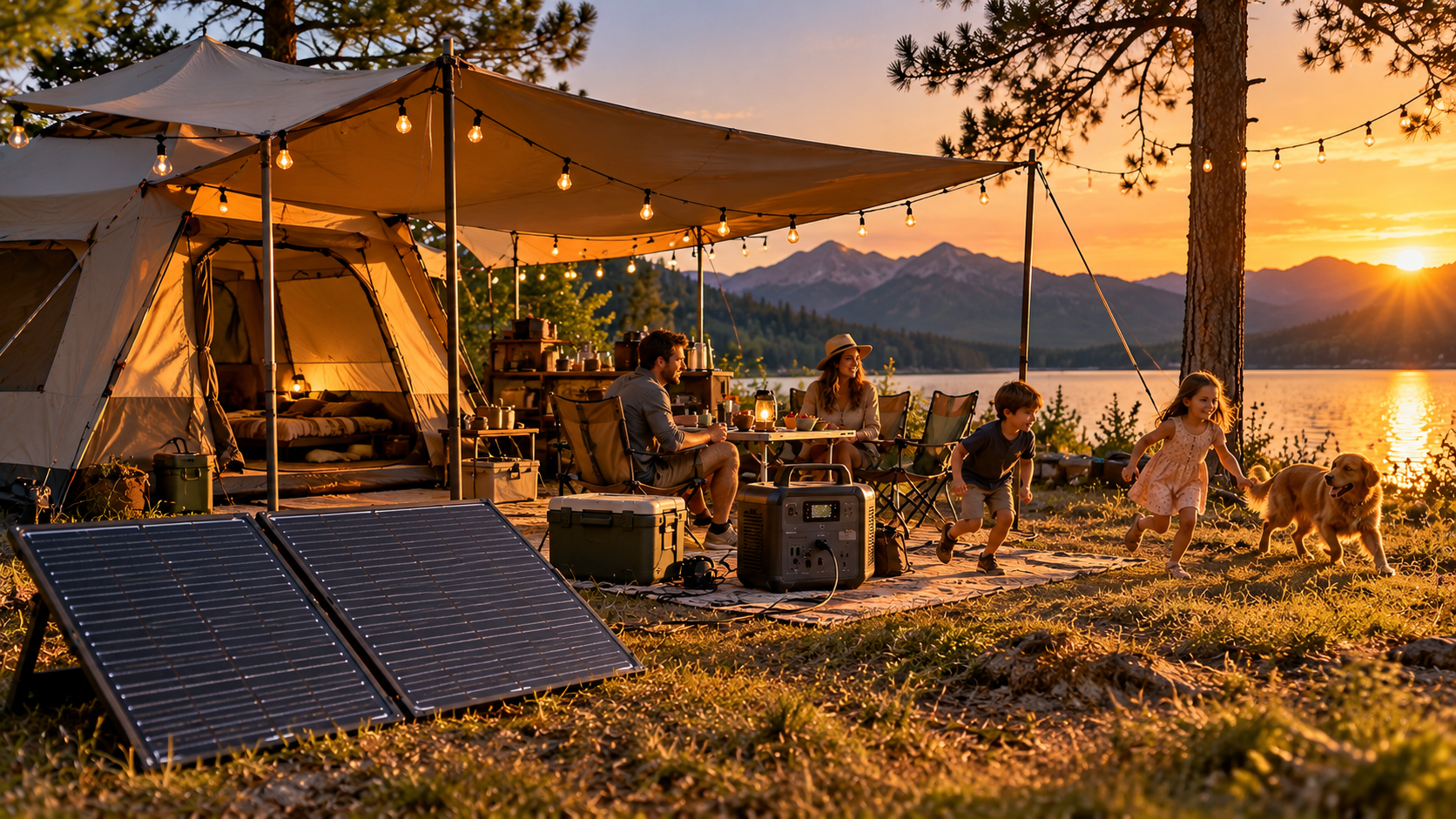
Basecamp Power
- Higher capacity for bigger groups
- Run several devices together
- Pairs with extra panels for faster charging
Foldable, flexible or high-output?
Foldable panels
Fold flat for storage or transport and stand up on a kickstand. Simple to set up and easy to re-aim through the day.
Flexible panels
Thin and lightweight, so they're easy to carry and can sit on curved surfaces. Keep them flat and secure, and handle them with care.
High-output panels
Larger panels such as 400W models charge much faster. They suit longer stays and bigger batteries, where weight matters less.
A simple checklist before you buy
Battery capacity (Wh)
Decides how long you can run your devices.
Output power (W)
Decides what you can run at the same time.
Solar input
Check the maximum solar input so your panels can charge at full speed.
Ports
Look for the USB-C, USB-A, AC and DC ports your devices need.
Weight and size
Check that it suits where you'll use and store it.
Warranty and support
Know how long the cover lasts and where to get help.
Pack smart, camp safe
Before you go
- Charge the power station to full.
- Test the solar panel and cables at home.
- Pack the charging cables your devices need.
- Make a short list of what you'll run.
At camp
- Keep it dry, shaded and ventilated.
- Don't cover it while it's charging or in use.
- Keep it away from flames and heat sources.
- Secure the panel against wind.
On the road
- Don't leave it in a hot, closed vehicle.
- Pack it where it can't slide or fall.
- Keep ports covered to avoid dust.
- Recharge when you can so you start full.
Questions campers ask
It depends on two things: the battery capacity (measured in watt-hours, or Wh) and how much power your devices draw. As a rule of thumb, runtime in hours is roughly capacity in Wh × 0.85 ÷ the device’s watts. A phone charger barely dents a large battery, while a camping fridge or a laptop used all day will use it faster. Use the sizing table above to add up your own list.
Yes. Pair the power station with a compatible solar panel, place the panel in direct sun, and connect it with the supplied cable. Charging speed depends on the panel’s wattage, how strong the sun is and how large the battery is. Higher-wattage panels charge faster, and moving the panel through the day to face the sun helps a lot.
Many can, but check the numbers first. Compare the fridge’s running watts (and its start-up surge, if listed) with the power station’s output rating, then check that the battery capacity covers the hours you need. Compressor coolers use far less power than electric heating products.
Keep the power station outside the sleeping area or in a well-ventilated spot, away from water, flames and direct heat, and never cover it while it’s in use or charging. Always follow the manufacturer’s instructions for your specific model.
For most camping needs, yes. A solar generator has no fuel, no exhaust and far less noise, so it suits campsites where quiet matters. The trade-off is capacity: it holds a fixed amount of energy, so size it to your trip. Heavy heating loads such as kettles, hot plates and heaters use a lot of power and aren’t what these units are best at.
Usually not. Most airlines limit lithium batteries to a much smaller size than a power station, so check your airline’s rules before you travel. Road trips, drive-in campsites and RV travel are where these units shine.
Add up the watt-hours you’ll use per day (device watts × hours used), then add a safety margin of around 20–30%. If you’re away for several days with no sun, multiply by the number of days. Then compare that with the Wh and output ratings on each product page. When in doubt, go one size up.
More ways to stay powered
RV & Van Life
Take reliable power wherever the road leads.
Work & Productivity Power
Keep your laptop and gear running from anywhere.
Emergency Power
Be ready when dependable electricity matters most.